
Sensor Size

Size Does Matter
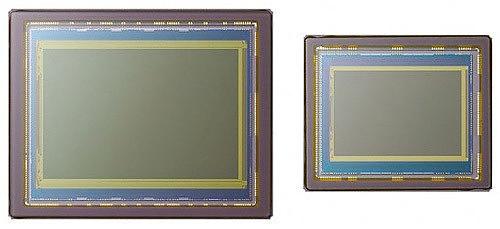 sensor-compare
Sensor Size
Modern DSLR--Digital Single Lens Reflex--cameras use an integrated chip sensor, Charged Coupled Device--CCD or Complementary Metal Oxide Semiconductor--CMOS instead of film. Let's look at the physical size of CCD or CMOS sensor used to capture your images. Although there are slight variations, virtually all DSLR sensors fit into one of three size categories (starting with the largest);
Full Frame
APS-C
Four-Thirds
Sensor size isn't as important as some people would make it out to be, however there are some key differences that you should understand. The first is what is known as the “crop factor.” As the diagram below shows, as the sensor gets smaller it captures a smaller area of the scene, resulting in a photograph that looks like it was taken at a longer focal length (1.5x or 1.6x longer for APS-C, 2x for Four-Thirds).
The crop factor isn't a big issue for most photographers, however it does have important consequences for some. If you're buying a digital SLR to replace a film model because you've got a kit bag full of lenses you need to be aware that unless you buy a full frame model all your lenses will produce very different results on your new camera.
For photographers shooting in telephoto the result is quite a bonus, as all your lenses will effectively get even more powerful. Conversely the crop factor means your wide angle lenses will no longer offer much of a “wide” field of view. Fortunately there is a wide range of specially designed “digital only” lenses for smaller sensor DSLRs.
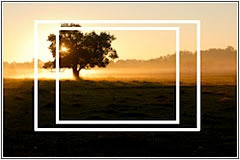
Above is a comparison of the three most common sensor sizes: Full Frame, APS-C and Four-Thirds. Smaller sensors “crop” the scene and make a lens appear to have a longer focal length.
The larger sensor generally means that full frame cameras will produce the best results in very low light and at higher sensitivities. The tradeoffs are that full frame cameras are big and expensive, and there is only a handful of models to choose from. You also lose the focal length “extension” offered by smaller sensor cameras when shooting with telephoto lenses.
APS-C is the most common format today, used in virtually all Canon, Nikon, Pentax and Sony DLSR models. With a crop factor of 1.5x or 1.6x you will need special digital lenses to get true wide angle results, but these are readily available and are usually less expensive than their “full frame” cousins. The standard “kit lens” supplied with most APS-C cameras is a good starting point, offering a versatile zoom range from wide angle to short telephoto.
Four Thirds is a new “all digital” format developed by Olympus and currently used in Olympus and Panasonic DSLR models. Unlike the other systems on the market Four Thirds is not based on any existing film SLR system and uses a totally new lens mount, so all the lenses in the system are designed for digital, making the crop factor issues mentioned above less relevant. With the smallest sensor size Four Thirds offers slightly more compact camera bodies and lenses. Although the smaller sensor should in theory mean that these cameras produce noisier (grainier) images in low light and at higher sensitivities, for most purposes the difference isn't major.